


Why Use Everything DiSC®?
A Powerful Tool for Stronger Leaders, Smarter Teams, and Healthier Cultures
Everything DiSC® is more than a personality assessment — it's a research-based framework that helps leaders and teams improve how they communicate, collaborate, and make decisions.
Built on decades of research from Wiley, Everything DiSC® provides personalized insights that drive real change in the way people work together. Through engaging assessments and interactive learning experiences, leaders and teams gain the self-awareness and emotional intelligence they need to succeed in today's complex workplace.

Why Leaders Use Everything DiSC®
Stronger Communication – Learn how to connect more effectively across different styles.
Improved Self-Awareness – Understand your natural tendencies and how they impact your leadership.
Healthier Team Dynamics – Build trust, resolve conflict, and create a culture of accountability.
Better Decision-Making – Leverage diverse perspectives to make more informed and confident choices.
Organizational Impact – From sales to leadership to culture, DiSC insights ripple across the entire business.

More Than an Assessment — A Learning Experience
Every profile comes to life through facilitated workshops, one-to-one Coaching, and peer group discussions. This ensures insights don't sit on paper — they transform behavior, culture, and results.
Backed by Research, Proven in Practice
With over 40 years of ongoing research and validation, Everything DiSC® is one of the most trusted assessment tools available. Focused Cloud® integrates DiSC into a larger coaching and decision-making framework, ensuring that leaders don't just gain insight — they apply it where it matters most.
Trusted Globally
The Everything DiSC® assessment is one of the most trusted tools for understanding human behavior in the workplace. Often called a "DiSC profile" or simply "DiSC," it is based on the research of psychologist William Moulton Marston, whose DISC theory remains a cornerstone of modern behavioral science.
At its core, DiSC reveals how people tend to approach problems, influence others, respond to pace, and follow rules. It does not measure intelligence, values, or skills — it focuses on observable behaviors that shape communication and relationships.
The Four DiSC Styles
Every individual has a unique blend of these four tendencies, usually with one or two that stand out most:

Dominance
Direct, decisive, results-oriented

Influence
Outgoing, enthusiastic, persuasive

Steadiness
Patient, dependable, supportive

Conscientiousness
Analytical, precise, quality-focused
More Than a Personality Test
While DiSC offers valuable insight into personality, it is not a complete picture of who you are. Instead, it measures two key dimensions of behavior that most strongly influence how we show up at work and in relationships. These insights help people:
Recognize natural strengths
Understand differences in others
Adapt communication to build stronger connections
At Focused Cloud®, we use Everything DiSC® not just for self-awareness, but as a practical tool for better leadership, healthier teams, and stronger decision-making.

The Two Dimensions
The DiSC assessment measures preferences and tendencies, not skills or abilities. The DiSC model is based on two fundamental dimensions of human nature:
-
Vertical: level of activity:
-
Do you thrive on speed, action, and instinctive decisions?
-
Or do you prefer a careful, steady pace, weighing options before moving forward?
-
-
Horizontal: level of acceptance:
-
Do you tend to question, challenge, and analyze new information?
-
Or do you prioritize harmony, relationships, and openness to new ideas?
-
Everyone falls somewhere along these two scales. Together, they form the foundation for the four primary DiSC styles. Where you land on each dimension shapes how you approach challenges, interact with others, and make decisions.


Level of Activity
On the DiSC map, the vertical dimension reflects pace and energy.
-
Top of the circle: People here tend to be fast-paced and outspoken. They are often described as assertive, dynamic, and bold. Traditionally, they see themselves as more powerful than their environment—so they work to shape and drive circumstances.
-
Bottom of the circle: People here are typically moderate-paced and thoughtful. They are often seen as calm, methodical, and careful. Traditionally, they view the environment as more powerful than themselves—so they adapt and respond to what's around them.
Most of us fall somewhere along this spectrum. The key is noticing: Do you naturally move quickly and take charge, prefer a steadier, reflective approach, or land somewhere in between?
Level of Acceptance
Individuals whose DiSC styles fall toward the left side of the circle tend to be naturally more skeptical. They are often described as logic-focused, objective, and challenging. Traditionally, these characteristics are explained by the idea that such individuals perceive their environment as antagonistic. In other words, they instinctively withhold trust from people and ideas until those external elements have been thoroughly vetted.
In contrast, individuals with styles on the right side of the circle are generally more receptive. They are often described as people-focused, empathetic, and agreeable. Traditionally, they are said to view their environment as aligned with their interests. As a result, they are inclined to see people and ideas around them as favorable and are more likely to extend trust readily.
Where do you see yourself? Are you more questioning and skeptical, accepting and warm, or somewhere in between?
Style Inclination and Dot Placement
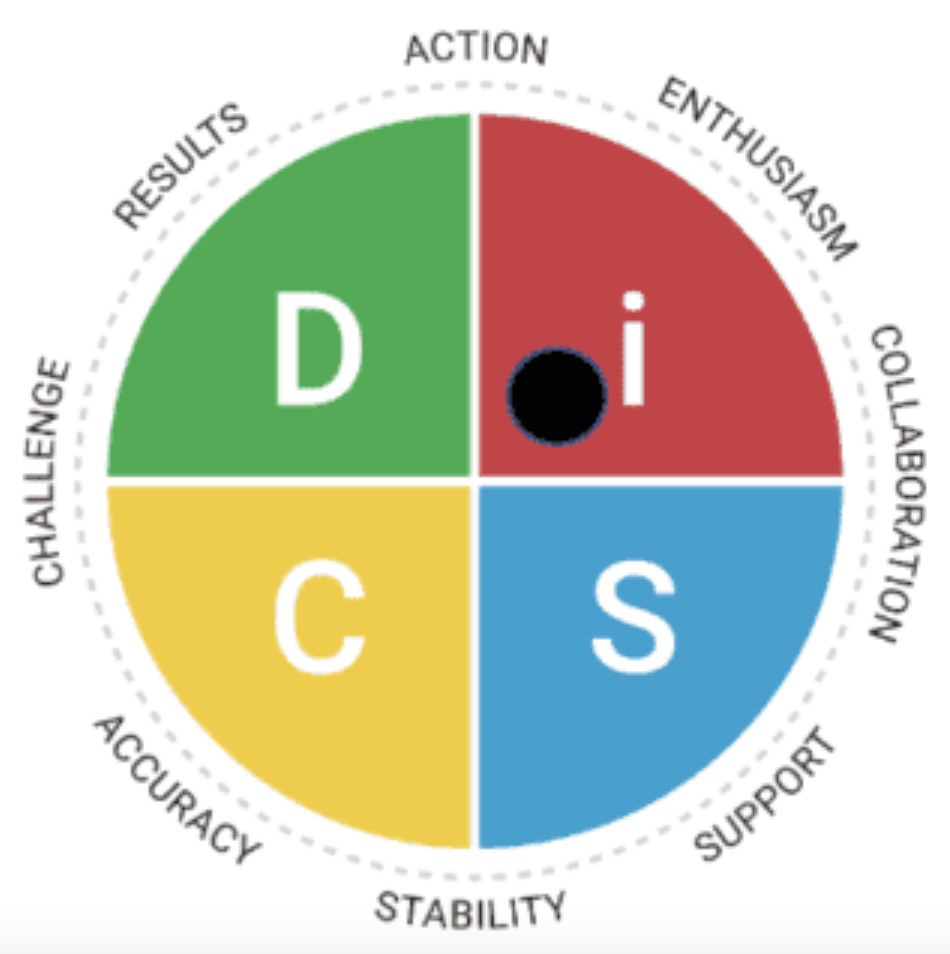
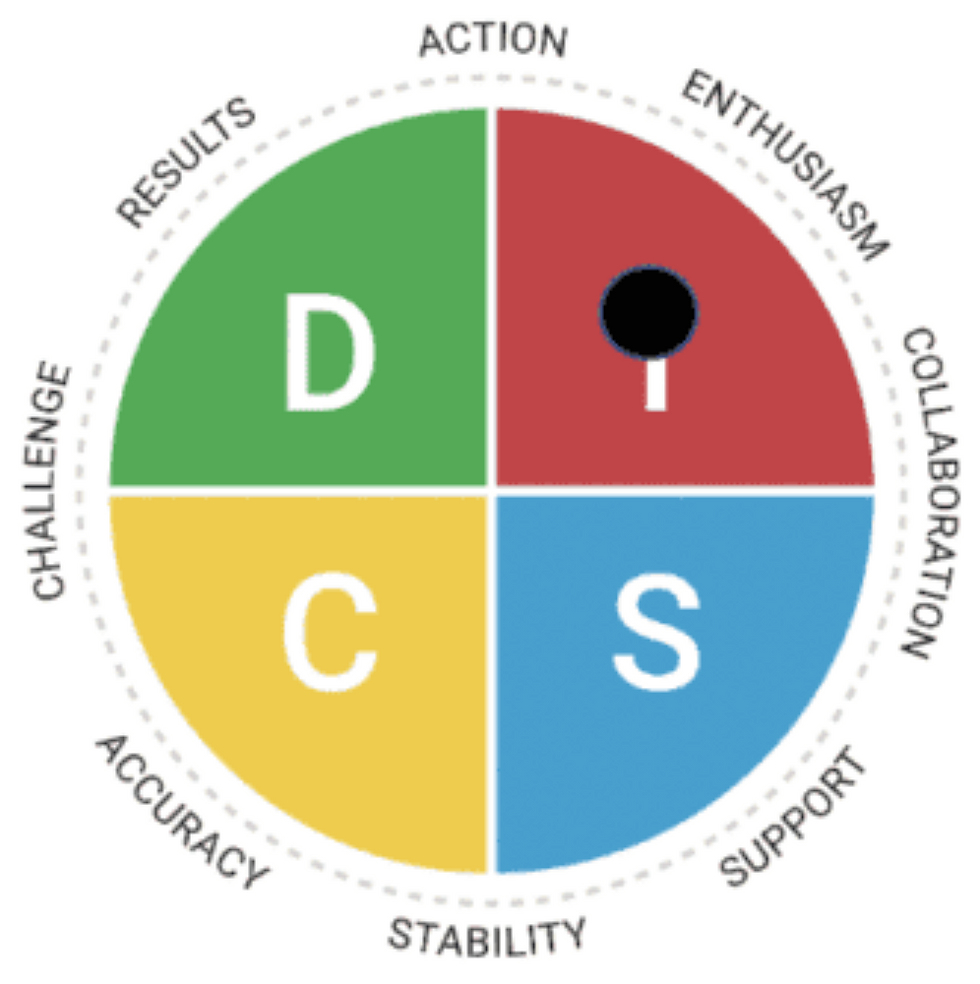
A person's preference for their DiSC style is indicated by the location of their dot on the DiSC map. When the dot is positioned closer to the edge of the circle, it reflects a stronger inclination toward that particular style. Conversely, a dot placed nearer to the center suggests a more moderate or flexible approach.
This image illustrates how someone may demonstrate a strong, moderate, or slight preference for the i-Style, depending on the dot's distance from the center.
Slight
Moderate
Strong

Style Alignment and Adaptability
A person's alignment with their DiSC style is reflected in the placement of their dot on the map. This alignment does not mean the individual is more or less of that style. They still tend to behave in ways consistent with their style's characteristics.
However, individuals whose dots are placed closer to the center of the circle typically show a lower intensity of preference. As a result, they may find it easier to adapt or stretch toward other behavioral styles when needed.
The dot's placement also indicates which priorities a person naturally prefers. At the same time, it reveals which priorities may require more effort to embrace, based on how far those priorities are from the dot's location.
What Is Your DiSC Style?
Everything DiSC® Workplace® is an excellent starting point for discovering your behavioral style. This assessment offers valuable insights for anyone seeking to communicate more effectively, understand why they naturally connect with specific individuals, and learn practical strategies for building stronger relationships.

Choosing Your Profile
Everything DiSC® offers targeted assessments designed to support specific training topics. Most commonly, teams and organizations begin with Everything DiSC® Workplace to strengthen teamwork, enhance organizational culture, and help individuals improve their communication skills.
Additionally, there are specialized assessments available to support leadership development and personal growth for employees at all levels, regardless of title.
Personal Development
There are many ways to improve how we work. The personal development assessments focus on key areas such as Emotional Intelligence, Sales, and Productive Conflict. Each assessment includes access to free resources such as comparison reports, team reports, and access to the Everything DiSC® with Catalyst™ platform, which help deepen understanding and support ongoing development.

Emotional Intelligence


Leadership Assessments
DiSC® is widely used to support leadership development. Its insights are straightforward, practical, and easy to apply. Leaders appreciate the model because it helps them tailor their communication to better connect with employees and stakeholders.
There are specific assessments designed to meet the needs of different types of leaders:


Focused Cloud® is an Authorized Partner

